Showing posts with label smartphones. Show all posts

Thursday, October 13, 2011

BlackBerry services restored

After three days of disruptions, BlackBerry services offering e-mail, messenger and other online services were restored, Canada-based Research in Motion said.

"Email systems are operating and we are continuing to clear any backlogged messages. Support teams are working to minimise the impact on our customers... We are working to restore normal service levels in all markets as quickly as we can," Research In Motion (RIM), maker of BlackBerry, Chief Information Officer Robin Bienfait said.

Since Monday, scores of BlackBerry users in Europe, the Middle East, India and Africa ( EMEIA), Canada, Latin America and US were facing problems in accessing the e-mail, messenger and other online services on their smartphones caused by a core switch failure.

RIM has about a million subscribers of BlackBerry services in India.

However, there was no clarity among the operators on the issue of offering any rebate on the tariff packages during the last three days as the service remained disrupted.

"I want to first apologise for the service interruptions and delays many of you have been experiencing this week... We are doing everything in our power to restore regular service everywhere and to restore your trust in us," Bienfait said in his message posted on the company's website.

Tuesday, October 11, 2011

Facebook launches iPad app

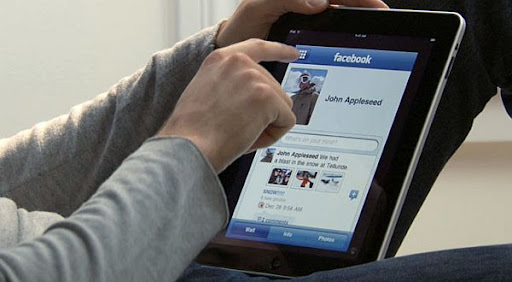
Facebook released its long-awaited iPad app and introduced support for social games on the mobile versions of its online service.

The dual announcements plug two key holes in Facebook's product offerings and could provide a way for Facebook to generate revenue from the more than 350 million users who access its service on mobile devices every month.

Facebook said that the mobile versions of its website will now offer tighter integration with third-party social games and applications. Those games, such as Zynga's Farmville, are extremely popular among Facebook users who access the service on their PCs.

Similar to the experience on a PC, Facebook users on mobile devices such as Apple's iPhone and Android smartphones will receive alerts in their newsfeed when their friends play certain games or invite them to play along with them.

Facebook's mobile service will also offer bookmarks within the website of a user's favorite games, for quick access.

Many of those games offer users the ability to purchase virtual goods -- such as additional equipment or clothing to enhance the experience in a game -- using Facebook's special so-called Credits currency. Facebook takes a 30 per cent cut of the revenue from those transactions.

The company said it would require third-party app developers to support Credits in the mobile versions of their games that interact with Facebook.

The rule only applies to games aimed at users of the Facebook website developed using HTML5 technology and accessed through a standard browser.

Facebook said the specialized iPhone app version of its service would not support its Credits currency, in accordance with Apple's terms of service.

The new version of Facebook for Apple's popular iPad tablet has been rumored on industry blogs for months. Facebook said the iPad app will offer enhanced photo-viewing capabilities and messaging capabilities.

Monday, October 3, 2011

Tough for Apple selling iPhones in India: IDC

Apple Inc, the world's largest smartphone maker, is having trouble selling iPhones in India, a market with 602 million active subscribers.

Apple, which will introduce a new iPhone version tomorrow, ships fewer handsets to the world's second-largest mobile-phone market than it does to Norway. Nokia Oyj and Research In Motion Ltd sell more devices in India, where smartphone shipments are forecast to grow almost 70 per cent a year until 2015, helping mitigate their market-share losses in the US and Europe.

Sales for the world's biggest company by market value are hindered because Indian wireless carriers, which started third- generation networks this year, have yet to offer nationwide services fast enough to take advantage of iPhone features, said Gus Papageorgiou, an analyst at Scotia Capital Inc. in Toronto.

"Networks in India are just not conducive for Apple -- 3G networks aren't quite where they are in Western Europe and North America," he said. "RIM got the right product, the right timing, the right app."

Apple shipped 62,043 iPhones to India in the quarter ending June 30, or fewer than to Norway, Belgium or Israel, according to estimates by Framingham, Massachusetts-based researcher IDC.

Apple accounted for 2.6 per cent of India's smartphone shipments in the quarter ended June 30, trailing RIM's 15 per cent, Samsung Electronics Co.'s 21 per cent and Nokia's 46 per cent, IDC estimates.

"The iPhone only really works when you have Wi-Fi," said Kshma Shah, a 25-year-old interior designer in Mumbai. "3G has barely started in India, and on 2G you just can't have the same experience."

The world's largest maker of tablet computers also shipped about 21,150 iPads to India in the same period, or 0.2 per cent of its global total, according to IDC.

RIM's BlackBerry Messenger instant-messaging service is popular because it was one of the first, and it functions well on networks a generation behind the speeds offered in the US and Europe, Papageorgiou said.

"Only a few of my friends have iPhones," said Mahafareenn Sarkari, a 25-year-old dance instructor in Mumbai. "BlackBerry is where everybody is, so it made sense for me to be on it, too."

RIM, which entered India in 2004, plans to extend its lead over Apple after expanding distribution to 80 cities from 15 starting last year, said Krishnadeep Baruah, director of marketing for Waterloo, Canada-based RIM in India.

"We want to ride this wave," Baruah said. "This is really the time to expand into the emerging towns and cities."

That contrasts with RIM's struggles worldwide, with its stock falling 61 per cent this year. At least five RIM executives have left since March, and the company sold half as many PlayBook tablets in the second quarter as analysts had forecast on average.

Nokia has more than 200,000 outlets in India and offers 13 smartphone models, Vilsha Kapoor of New Delhi-based Six Degrees PR, hired by Nokia to handle public relations, said in an e-mail.

The Espoo, Finland-based company is seeking to reverse its global performance. Shares are down 45 per cent this year, and it is eliminating at least 7,500 jobs as Apple takes global market share and Asian competitors push the price of smartphones below $100.

68 percent growth Smartphone shipments in India are poised to jump almost eightfold, or an average of 68 per cent a year, to 81.5 million units by 2015, according to IDC.

Apple products aren't as accessible in India because consumers can't buy iPhones, iPads and iTunes songs from company stores or its website. Apple sells through licensed resellers, including a Reliance Industries Ltd subsidiary and Tata Group's Croma.

"Apple continues to invest in India as a growing market for the company," Alan Hely, a London-based spokesman for Apple, said in an e-mailed response.

Steve Dowling, a Cupertino, California-based spokesman for Apple, declined to comment. In China, Apple operates six stores, including its highest- grossing ones worldwide. Revenue in China, Taiwan and Hong Kong increased six times to $3.8 billion in the quarter ended June, Apple Chief Executive Officer Tim Cook said in July.

Apple may be relying more on word-of-mouth among India's wealthy, said Harish Bijoor, who runs his own brand consulting firm in Bangalore.

"They don't see a big enough market for their products to make it worthwhile," Bijoor said. "They've barely done any advertising. It's pathetic, really."

Cost is also an issue in a country where the World Bank estimates that about 900 million people live on less than $2 a day.

The cheapest iPhone 4 costs $705 at Reliance's iStore, while the cheapest iPad 2 sells for about $603. In Apple's US online store, the iPhone 4 starts at $199 with an AT&T Inc contract and the iPad starts at $499.

BlackBerrys under $200 made up 40 per cent of their shipments in India in the quarter ended June 30, said TZ Wong, an analyst for IDC.

"I don't think Apple is a brand for the masses," said Ajit Joshi, managing director of Croma, which also sells other brands besides Apple. "It's a brand for the classes."

The masses may be getting wealthier as India's new five- year plan aims for 9 percent growth in gross domestic product. India last year joined the top dozen countries with the most millionaires, according to a report by Capgemini and Merrill Lynch Global Wealth Management in June.

Salaries in India also are set to rise the most in the Asia-Pacific region this year, according to an Aon Hewitt LLC survey released in March 8.

"It's a brand-in-waiting," said Viren Razdan, managing director of consulting firm Interbrand's Mumbai office. "Apple is waiting for infrastructure and consumer maturity."

Tuesday, August 30, 2011

Samsung launch three new Wave series smartphones

Global handset maker Samsung Electronics Co Ltd today announced the launch of three new smartphones- Wave 3, Wave M and Wave Y.

All three devices are powered by Samsung’s own new bada 2.0 platform, said an official press release from the company. In pictures: Samsung Tab 10.1 released in India

Samsung Wave 3 comes with a 4” Super AMOLED display, a 1.4GHz processor and HSPA + connectivity packed into a 9.9mm brushed-metal case. The phone has a slim unibody design and is constructed of anodized aluminium.

The phone includes Samsung’s integrated Social Hub and Music Hub, which allows the purchase and download of tracks and albums over-the-air.

Samsung Wave M has a 3.65” HVGA screen made from tempered glass and a metallic body.

The phone allows streamlined messaging feeds, enhanced on-the-go web browsing and Wi-Fi applications. Read: Cheaper iPhone 4 to be released within weeks

Samsung Wave Y, touted as the smartphone for beginners, has a metallic hairline body, a 3.2” and an HVGA screen. It comes with Music Hub, a portable music manager, which gives ‘users a jukebox in their pocket’.

Both Wave M and Wave Y allow mobile social networking with Social Hub and ChatON.
(ChatON is Samsung’s global cross-platform communication service that instantly links users with all friends and contacts, and allows setting up of micro-communities through group chat and sharing of content and conversations between mobile and PC.)

All three phones allow multi-tasking, Wi-Fi Direct, voice recognition and Near Field Communication (optional). They also offer advanced services such as photo and file sharing without internet networking, mobile payment and transport pass-card recharge.

 JK Shin, President and Head of Samsung’s Mobile Communications business said,“Smartphones are gaining popularity by the day. The new additions to the Wave portfolio are the first to benefit from the power of our bada 2.0 platform; the full extent of our commitment is clear to see in each device. We’ve produced easy-to-use smartphones that will inspire the market.”

Friday, August 26, 2011

Verizon Wireless Pushes Square-Competitor to mobile payment at retails


Verizon Wireless will be adding one more item to the accessory rack in its stores.

Nope, it’s not earbuds or a new iPhone case. It’s a credit card reader.

The wireless carrier has formed a strategic alliance with Intuit to start selling that company’s GoPayment credit card reader in its 2,300 retail stores and other distribution channels.

Mike Schaefer, Verizon’s executive director of product development, tells me that salespeople in Verizon retail outlets will be trained to teach owners of small-to-medium-sized businesses — or anyone else, for that matter — how to install the application, sign up, and start taking credit card payments.

Other devices on the market offer similar services, but Schaefer said Verizon picked Intuit’s card reader to exclusively feature in its stores. He declined to disclose the terms of the agreement. Other similar products are available from Square and VeriFone.

Many small-business owners are already acquainted with Intuit through its line of software products, including Quicken, QuickBooks and TurboTax.

Andrew Morbitzer, director of Intuit’s Payments Solutions Group, said this is the first time its card readers will be available at retail other than at the Apple store, which was negotiated by the company’s partner.

Verizon Wireless customers will be able to get the card reader for free after a $30 mail-in rebate. The application can be downloaded for free; Intuit charges 2.7 percent of each transaction. It also offers a monthly plan that costs $12.95, along with a lower 1.7 percent transaction fee. Verizon customers who opt for the monthly plan will not have to pay the fee for 60 days.

GoPayment is actually one of Intuit’s fastest growing businesses and Hylen says the service is on track to process over $1 billion in transactions for the year. Intuit declined to reveal how many businesses are using GoPayment but did say that customer acquisition has gone up by eight times since January.