Showing posts with label Supreme Court. Show all posts

Friday, November 11, 2011

Supreme Court expresses shock over Pakistanis in Indian jails


The Supreme Court on Friday expressed shock and dismay over 2 Pakistanis being kept in Jammu and Kashmir prisons for over 40 years without ever having faced trial.

The court, hearing a public interest case filed by a member of the public, ordered the central government to file a comprehensive report explaining the detentions, AFP reported.

"It's shocking that over 254 Pakistani nationals are languishing in jails without a trial," said Supreme Court judge RN Lodha.

The inmates are being held in the state of Jammu and Kashmir, with many thought to be people arrested after unwittingly crossing the disputed border in the area, the court heard. Four are women.

It is thought that there may be inmates held without trial in other states too.

The prime ministers of India and Pakistan said on Thursday they expected to open a "new chapter" in their fractious relationship after talks at a regional summit in the Maldives.

Saturday, November 5, 2011

SC notice to Centre on MPs facing criminal charges

The Supreme Court on Friday sought response from the Centre and the states on a plea seeking fast track court proceedings in criminal cases pending against Members of Parliament, saying it is "very disturbing" that 162 lawmakers are facing various criminal charges.

A bench headed by Justice P Sathasivam said the matter required consideration and issued notices to the Centre and the state governments asking them to file their responses within a month.

The court passed the order on a PIL by former chief election commissioner JM Lyngdoh pleading that the cases pending against MPs should be referred to fast track courts for quick disposal.

Senior advocate Rajiv Dhavan, appearing for Lyngdoh, submitted that 162 MPs were involved in various criminal cases and out of them, 76 were facing charges of serious nature and that they must be referred to fast track courts for timely disposal.

Friday, October 28, 2011

Rajiv killers' pleas adjourned till Nov 29

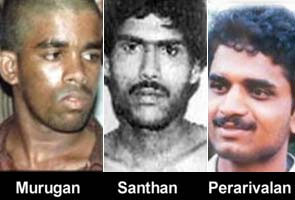
The Madras High Court adjourned till Nov 29 the hearing on the petitions by the three men convicted for assassinating former prime minister Rajiv Gandhi's assassination to commute their death sentences even as the central government contended that the trio be hanged.

Murugan alias Sriharan, T. Suthendraraja alias Santhan and A.G. Perarivalan alias Arivu had filed their plea to commute their death sentences. The case came up for hearing before a bench comprising Justices C. Nagappan and M. Satyanarayanan.

On Aug 30, the court stayed the Sep 9 hanging of the three convicts, adjourned the hearing for eight weeks and issued notice to the central and state governments.

President Pratibha Patil Aug 11 rejected the mercy petitions of the three who are linked to the Liberation Tigers of Tamil Eelam (LTTE) and sentenced to death for their involvement in Gandhi's May 21, 1991 assassination.

The central government contended in the high court that the three convicts should be hanged as the president had rejected their clemency petitions.

It contended that once the clemency petition is rejected by the president the proper course is to execute the sentence.

A petition for transfer of the case to the Supreme Court is pending with the latter.

Gandhi, who was the prime minister 1984-89, was killed by suicide bomber Dhanu at an election rally in Sriperumbudur near here. Fourteen others also lost their lives in the blast.

The Tamil Nadu assembly Aug 30 moved a resolution asking the president to review her decision rejecting the three mens' mercy plea and commute the death sentence to life imprisonment.

Monday, October 10, 2011

Supreme Court to hear Rajiv killers plea on Oct 19

The Supreme Court on Monday adjourned hearing on a petition seeking transfer of a case pending before Madras High Court in which the execution of death sentence awarded to three assassins of late prime minister Rajiv Gandhi was stayed. It listed the plea for October 19.

An apex court bench of Justice GS Singhvi and Justice SJ Mukhopadhaya directed the listing of the plea on October 19 when it would also hear a petition by Davindra Pal Singh Bhullar, seeking commuting of his death sentence.

Bhullar was convicted in 2001 for his involvement in the 1993 car bomb blast at the Indian Youth Congress headquarters in New Delhi.

However, the plea by Chennai-based lawyer IK Venkat, seeking transfer of the case from the high court to the apex court, was opposed by senior counsel Ram Jethmalani who appeared for the three assassins.

The Tamil Nadu government also opposed the plea for transfer.

Wednesday, October 5, 2011

2G: Raja seeks permission to appear in SC

Former telecom minister A Raja, the prime accused in the 2G spectrum case on Wednesday filed a petition in the Patiala House Court seeking permission to appear in the Supreme Court on Monday.

A Raja had told a Delhi court earlier on Friday that he would not respond to CBI's fresh plea to invoke additional charge of criminal breach of trust against all the accused till the agency stated that its probe in the 2G spectrum allocation scam was over.

Special CBI Judge O P Saini, who was to receive replies of 17 accused including Raja on the plea of CBI, was taken aback when senior advocate Sushil Kumar, appearing for the DMK leader, had said he would not participate in hearings till CBI clarified its position on the status of probe.

"I am taking a very clear stand that till the time CBI files an affidavit or says it on oath here that investigation is complete or going on, I am not going to participate in the proceedings of this case," Kumar had said.

Thursday, September 22, 2011

Chidambaram in 2G net, SC to decide on CBI probe

The Supreme Court is expected to decide, Today, whether a Central Bureau of Investigation (CBI) probe is needed into what Subramanian Swamy alleges to be the role of P Chidambaram in deciding the price of 2G spectrum allocations.

Janata Party president Subramanian Swamy had indicated that Home Minister P Chidambaram, as the then finance minister, was along with jailed former communications minister A Raja involved in deciding the 2G spectrum price.

The documents filed by Swamy included a communication of Jan 30, 2008, by the department of economic affairs of the finance ministry recording the gist of the meeting between the then finance minister Chidambaram and Raja.

The communication signed by the then finance secretary D Subbarao said: "The FM (finance minister) said that for now we are not seeking to revisit the current regimes for entry fee or revenue sharing."

Subbarao also recorded the finance minister's suggestion that "keeping in view lessons of experience, allotment of licences and allocation of spectrum must be based on solid legal grounds".

Swamy told the court that all along, on the question of 2G spectrum pricing, the then finance minister and his ministry's officials were kept in the loop.

He pointed to various letters and internal communications and said that April 21, 2008, the then finance minister sent a "non-paper" to the communications minister, conveying that an "in principle" decision may be taken to price the spectrum beyond 4.4 MHz as has been suggested by the department of telecommunications (DoT).

The government and the CBI have opposed a CBI probe into Chidambaram’s role. They are of the view that, as a special trial court is besieged of the matter, the SC should not order a CBI probe at this juncture.

Meanwhile, in a new twist to the second generation (2G) spectrum case, a note to the Prime Minister's Office from the finance ministry says this resource could have auctioned in 2008 if Home Minister P Chidambaram, then the finance minister, had "stuck to his stand".

In the note, the finance ministry says Chidambaram could have prevented spectrum from being given away at throwaway prices by insisting on its auction -- alluding that presumptive losses worth thousands of crores could have thus been avoided.

The note, which was apparently shown to Finance Minister Pranab Mukherjee and accessed by way by an application under the Right to Information Act, was prepared by a deputy secretary in the finance ministry and sent to the Prime Minister's Office March 25.

Tuesday, September 20, 2011

Black money: SC verdict on recall SIT probe

The Supreme Court is expected to deliver its verdict on the maintainability of the Centre's plea for recall of its July 4 order appointing an SIT to probe the black money issue.

The case would be heard by a bench of justices Altamas Kabir and SS Nijjar.

During the last hearing on September 1, senior counsel Anil Divan, appearing for the petitioners Ram Jethmalani and others, said the Centre's plea should be dismissed as the recall application "is, in fact, an appeal on merits, disguised as an application for modification and is an abuse of the process to defeat the public interest".

Divan submitted that the order constituting the SIT was passed by the apex court after hearing detailed arguments for several days.

Citing the apex court's earlier directions on forming SITs in cases relating to post-Godhra riots and CBI investigations in various matters, Divan argued that appointment of the two Supreme Court judges to head the SIT would only lend credibility to the probe.

The counsel submitted that the Centre cannot oppose it as it did not violate its fundamental rights and the principle of natural justice was observed by hearing the government before passing the impugned order.

Attorney General G E Vahanvati, in his brief intervention, said the order ought to be recalled as the Centre was proceeding in the right direction in unearthing the black money allegedly stashed away in foreign tax havens. The Centre had earlier told the bench that the SIT set up by the apex court to probe and unearth black money needs to be scrapped as the investigating agency cannot function like a "super power."

Vahanvati had said the Government had "very serious" reservations on the court's directions which had also cast aspersions on sincerity of the Government in tackling the black money menace.

Divan had sought dismissal of the Centre's application and had said the apex court had rightly constituted the SIT as even the Centre had at that time admitted that the investigations were not proceeding in the right direction.

The bench had pointed out that the SIT was initially constituted by the Centre and the apex court had merely incorporated the names of retired SC judges, justices B P Jeevan Reddy and M B Shah.

The government, in its application, had also raised objections to the apex court remarks criticising the Cenrte's handling of black money cases.

The court had made the critical observations while appointing its former judges - justices Reddy and Shah, as chairman and vice-chairman of the 13-member SIT into which the Director of Research and Analysis Wing (RAW) too had been inducted.

The Centre, in its application for recall of the Court's July 4 order had contended that the SIT was formed without being prayed for and has questioned the Court remarks that investigations into the issue of black money stashed abroad was moving at a "laggardly pace".

The bench had in its order said the money stashed away reveal the degree of "softness of the State".

Friday, September 2, 2011

SC to decide on acquittal of 26/11 accused

The Supreme Court will on today hear the petition filed by the Maharashtra government challenging the acquittal of Faheem Ansari and Sabauddin Ahmed, the alleged Indian conspirators of the 26/11 Mumbai terror attack.

Former Solicitor General Gopal Subramaniam and Special Public Prosecutor Ujjwal Nikam will argue the case on behalf of the Maharashtra government.

The petition filed through advocate Sanjay Karabia has challenged the February 21 Bombay High Court order upholding their acquittal by the trial court. The two were acquitted for want of corroborative evidence.

The High Court had, however, confirmed the conviction and death sentence awarded to the lone surviving Pakistani terrorist Ajmal Kasab.

Kasab has also moved the Supreme Court challenging his conviction and death sentence in the 26/11 attacks.

The High Court had upheld the death sentence of Kasab for the "brutal and diabolical" 26/11 Mumbai attacks aimed at "destabilising" the government.

Kasab's death penalty was upheld on charges of criminal conspiracy, waging war against the nation, IPC section related to murder and under sections of Unlawful Activities (Prevention) Act.

166 people died in the Mumbai attacks on November 26, 2008, following which Kasab and two Indian nationals were tried by a special court in Mumbai. Within a year, the special court gave Kasab death on five counts, while the accused Indians, Ansari and Shaikh, were let off for lack of evidence.

Wednesday, August 17, 2011

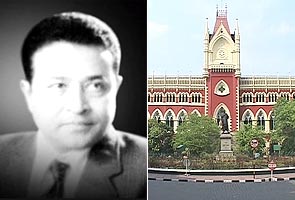
Rajya Sabha set to impeach Justice Soumitra Sen

Rajya Sabha will be converted into a court on Wednesday for its first impeachment proceeding against a judge as it takes up a motion against Justice Soumitra Sen of the Calcutta high court.

The Upper House will make history when it initiates the process against the controversial judge who has been held guilty on corruption charges by a specially constituted committee.

53-year old Sen will be the second judge against whom impeachment proceedings will be initiated when Rajya Sabha takes up the motion.

The first such case involved the impeachment motion in Lok Sabha of Justice V Ramaswami of the Supreme Court in May 1993 which fell due to lack of numbers after Congress members abstained.

The discussion on the motion is likely to spill over to August 18 and the occasion is expected to be utilised by the Elders to express their views on judicial activism and overreach.

The first of the two grounds of misconduct against Sen being cited in the motion is misappropriation of large sums of money, which he received in his capacity as receiver appointed by the High Court.

The second ground is that he misrepresented facts with regard to the misappropriation of money before the High Court.

While CPM leader Sitaram Yechury will move the motion, Parliament sources said the judge, accompanied by about five lawyers including Subhash Bhattacharya, will present his case before the Bar.

Besides Yechury, the motion will also be moved by his party colleague Prasanta Chatterjee and Leader of Opposition Arun Jaitley.

The issue of the impeachment proceedings was also deliberated upon on Tuesday at the meeting of the Cabinet Committee on Political Affairs headed by Prime Minister Manmohan Singh.

As the Upper House is meeting for a judicial function, parties have restrained from issuing whips to direct members to vote in favour or against the motion.

At the same time, Congress has issued a three-line whip to its members in both the Lok Sabha and Rajya Sabha to be present.

Under the constitution, a judge of a high court or the Supreme Court can be removed by the President by a motion adopted in both the Houses of Parliament by two-thirds majority of the members present and voting. This exercise has to be carried out in the same session.

Sen, who has been held guilty on corruption charges by a panel appointed by Rajya Sabha Chairman Hamid Ansari, will be given 90 minutes to present his case. The Inquiry Committee comprised Justices B Sudershan Reddy, Mukul Mudgal and noted jurist Fali S Nariman.

After the motion is moved, Sen or his counsels will present the case and leave. A discussion on the motion will begin thereafter when the Rajya Sabha re-converts itself from being a court.

If the motions are approved, a reference would be sent to the President "to pass an order for the removal of the said Soumitra Sen from his office as a Judge of the high court at Calcutta."

If Justice Sen resigns before the Rajya Sabha takes up the impeachment proceedings, the motion will become infructuous.

Justice P D Dinakaran, Chief Justice of the Sikkim high court, against whom the Rajya Sabha Chairman had earlier set up a similar judicial panel to inquire into corruption charges, had resigned before the issue was taken up by the House.

Supreme Court stays Hasan Ali bail order

The Centre on Tuesday withdrew the demand for the recall of the July 4 Supreme Court order on black money and decided to settle for a mere modification of the direction to constitute a Special Investigation Team (SIT) to probe such cases.

The move came on a day the apex court stayed the release of Hasan Ali Khan, who had been granted bail by the Bombay High Court in a black money case.

A bench presided over by Justice Altamas Kabir stayed the operation of the high court order while issuing notice on an appeal by the Enforcement Directorate.

Listing the matter for hearing on Thursday, the court said the order granting bail should be on hold till then. Khan, who is facing charges of parking thousands of crores in foreign banks, was arrested after the Supreme Court's observations alleging inaction on part of the ED in the case.

In the earlier case, with the petitioners submitting that the government was seeking a review of the order in the name of modification, the bench observed that it would first hear arguments on maintainability of the application by the Centre.

Attorney General G. E. Vahanvati submitted before the bench that the government only wanted modification of "paragraphs 49 and 50" of the order. The paragraphs pertain to directions on constitution and working of the SIT on black money.

The Centre in its application filed earlier had sought "recall" of the order and modification of the directions. It had specifically alleged that paragraphs 1 to 20 of the order were written without hearing arguments.

The court had violated the principles of natural justice by not hearing it, the Centre had contended.

Senior counsel Anil Divan, appearing for petitioner Ram Jethmalani, objected to a paragraph in the application stating that then solicitor general Gopal Subramanium was not authorised to make admissions on behalf of the government.

Opposing the application, Divan said the government was seeking a review of the order but had filed an application for modification instead of filing a review petition. A review petition is decided in chambers without hearing the petitioner.

He said the Centre had served a fresh application on Tuesday in which it had sought modification of paragraphs 49 and 50. Incidentally, the term "recall" did not find mention in the new application. Divan said the government had not complied with the order despite there being no stay. "The Centre is brazenly in breach of all directions," he said.

Vahanvati stressed that the government now wanted limited relief.

On Divan questioning the very maintainability of the application, Vahanvati said: "I am ready for arguments on maintainability and even contempt." The matter will come up for hearing before the Supreme Court on August 24.

Friday, August 12, 2011

Prakash Jha moves SC against ban on 'Aarakshan'

Film producer Prakash Jha on today moved the Supreme Court to lift the ban on his film 'Aarakshan' in states of UP, Punjab and Andhra Pradesh.

, Jha in his writ petition said that the ban on 'Aarakshan' goes against the spirit of freedom of expression guaranteed by the Constitution,  advocate Ameet Naik told.

The matter is scheduled to come up for hearing at 2:00pm today.

According to report, Jha, who held a press conference in Mumbai on today, said he was ready to make minor changes in the film, respecting concerns voiced by different political bodies.

"We have agreed to make minor changes following objections. There are certain dialogues and scenes that have been edited. Reservation is not a necessity but a Constitutional truth and we have been very careful about depicting it in the film," Jha said.

The director said his film is not only about reservation but also deals with the commercialisation of education.

"It (the ban) could be because of political reasons. We are discussing the matter with people there. With a sensitive issue like this there is always doubt but we are trying to discuss and resolve it. What else can I do," he said.

The security for the film's lead cast--Amitabh Bachchan and Saif Ali Khan--has also been beefed up by the Mumbai police.


Wednesday, August 10, 2011

Bringing India flag to common man

It was on 9th August, last year, that the Bilaspur high court in a landmark judgment gave the common man the right to fly the national flag at night with due dignity. Earlier, in 2004, a Supreme Court judgment allowed the common man to fly the flag.

The Bilaspur judgment came on an auspicious day, as August 9 is also Kranti Din, the day the Quit India Movement was launched. "We thought this is the best day to organize a human chain to spread awareness about our right to fly our national flag day or night, with due dignity," says ad-filmmaker Jaiprakash Bhande, the founder-member of Project Tiranga Trust.

The group formed a human chain at Dadar, in front of Plaza theatre, and in Thane city, in front of Courtnaka rest house, for about two hours in the morning. Bhande decided to make people aware about their right to fly the national flag by setting up a group -Project Tiranga Trust during the Ayodhya verdict on September 30, 2010, along with some like-minded persons. The group distributed paper flags and sticker flags to passers-by at Dadar and Thane. The air was filled with the chants of Bharat Mata Ki Jai and Vande Mataram

Friday, August 5, 2011

Amar Singh in cash-for-vote scam

Delhi Police told the Supreme Court on Thursday that its investigations into the cash-for-vote scam made out a clear case under the Prevention of Corruption Act, with the needle of suspicion firmly pointing to former Samajwadi Party general secretary Amar Singh.

Suhail Hindustani, who was the alleged conduit for the payment of the bribe money, and some other personalities could face charges under Section 13 of the Prevention of Corruption Act read with Section 120B (conspiracy) of Indian Penal Code, Delhi Police sources said.

 Additional solicitor general Harin Rawal on Thursday made a mention of the report, filed in the registry, before a bench of Justices Aftab Alam and R M Lodha who are to hear the case on Friday.

The police sought further time to unravel the entire conspiracy and promised to keep the court updated periodically about the progress made in the investigations.

Delhi Police quickened its probe into the case after a rebuke from the Supreme Court for its lethargy in investigating the bribery scam.

Within days of the court pulling up Delhi Police on July 15 for being slack in investigating the two year-old case of serious consequences, police arrested Sanjeev Saxena, considered close to Amar Singh, and followed it by picking up Suhail Hindustani, who attempted to drag the PM and Congress leaders into the controversy.

On July 15, the court had criticized Delhi Police for its "inefficient and directionless" probe into the cash-for-vote scam, which had cast shadows on the Manmohan Singh government's confidence vote victory in Parliament in 2008.


After a Wikileaks disclosure pointing to use of bribes in the 2008 trust vote triggered a furore in Parliament, Prime Minister Manmohan Singh had attempted to blunt the opposition attack by saying a parliamentary committee had probed it and concluded that there was insufficient evidence to prove bribing of MPs. "I am convinced that taking the report as a whole, this is a correct inference," he had said on March 23 on the floor of Parliament.