Showing posts with label Naoto Kan. Show all posts

Saturday, August 27, 2011

Close race seen to select next Japanese leader

A close race emerged Saturday among the men seeking to replace Prime Minister Naoto Kan and lead Japan as it emerges from its worst disaster since World War II, with five declaring their candidacy for the ruling party's top spot.

Kan announced Friday he would resign after serving nearly 15 months that have been plagued by ruling party infighting, gridlock in parliament and clamorous criticism of his administration's tepid initial reponse to the March 11 earthquake and tsunami and ensuing nuclear crisis.

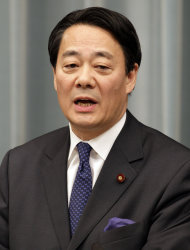
A new leader is to be chosen Monday. Public opinion polls show that the favorite to replace Kan is former Foreign Minister Seiji Maehara, but Trade Minister Banri Kaieda has emerged as a strong contender said he was backed by veteran party power broker Ichiro Ozawa.

The Japanese public, yearning for political unity and resolve in the wake of the disasters, has grown disgusted with the squabbles and blame-trading that have dominated parliamentary sessions.

The five members of the ruling Democratic Party of Japan who declared their candidacies after Kan's announcement planned to hold news conferences and debates Saturday and Sunday. Then, the party's 398 members of parliament were to vote Monday to choose the new party chief, who will almost certainly become prime minister because of the party's majority in the more powerful lower house.

Kan's successor will become Japan's sixth prime minister in five years, perpetuating the high turnover in political leadership even as the country grapples with a sluggish economy, an aging population and the enormous reconstruction effort after the country's triple disaster.

So far, candidates running for party chief have spelled out little about their vision for post-tsunami reconstruction or other serious issues, such as tackling the bulging national debt. Most of them also have not taken a clear stance on the future of atomic power despite growing public worries about meltdowns at the Fukushima Dai-ichi nuclear power plant.

In the murky world of faction-dominated Japanese politics, they seem more concerned about getting votes from fellow party members and shoring up their base of support, experts say.

The party leadership race could end up as a duel between the relatively young and telegenic Maehara, the former foreign minister, and Kaieda, the economy minister, who reportedly has the backing of party stalwart Ozawa.

A China hawk, Maehara, 49, gained prominence by taking a firm stand toward Beijing during a territorial spat last year over some disputed islands in the East China Sea. He is strongly pro-Washington and supports a close security alliance with the U.S.

Other candidates in the party leadership race include Finance Minister Yoshihiko Noda, who has spent recent weeks contending with the yen's record appreciation that is hurting Japan's exporters, former Transport Minister Sumio Mabuchi and Farm Minister Michihiko Kano.

After Monday's party vote, the new Cabinet could be installed as early as Tuesday.

Friday, August 26, 2011

Japan PM to resign, successor race wide open

The race to pick Japan's sixth leader in five years was wide open on Friday after a scandal-tainted party powerbroker looked likely to refuse to back the most popular candidate just days before a vote.

Prime Minister Naoto Kan, who came under fire for his response to the massive March tsunami and the radiation crisis it triggered, confirmed his intention to step down at a gathering of ruling Democratic Party of Japan lawmakers, clearing the way for the party to pick a new leader on Monday.

"In a severe environment, I did what I should have done," Kan told party MPs after resigning as party head. He added he would work to achieve his vision of a society that does not rely on nuclear power.

His successor faces huge challenges, including a strong yen seen as a threat to the export-reliant economy, rebuilding from the devastation of the March disasters, ending the radiation crisis at a crippled nuclear plant, forging a new energy policy, and curbing huge public debt while funding the bulging social welfare costs of an ageing society.

Whether and when to raise taxes to curb a public debt already twice the size of Japan's $5 trillion economy is a focus of debate in the leadership race, but any decision by Ozawa on who to back is seen as likely to be decided more by his hopes of boosting his clout than by policy positions.

It was unclear if Ozawa, who heads the DPJ's biggest group despite suspension of his party membership over a funding scandal, would back an existing candidate such as trade minister Banri Kaieda or seek a new contender to support.

There is even speculation Ozawa might back Finance Minister Yoshihiko Noda, the most fiscally conservative of the current contenders.

Ozawa long ago proposed raising the sales tax to fund social welfare costs but in recent years has promoted populist policies to give consumers more spending power.

Most other candidates agree on the need to curb debt but are cautious about the timing of a sales tax hike and oppose higher levies for rebuilding from the March disasters.

"I've known Mr. Ozawa for 43 years and he has never acted based on policies," ruling party elder Kozo Watanabe told Reuters in a recent interview.

But in a sign of how divided the party has become, the Yomiuri quoted a source close to Ozawa as saying: "We definitely cannot trust Mr. Maehara."

Maehara promises to focus economic policy on promoting growth and beating deflation and is the most popular with voters among seven contenders jostling for the nation's top job.

But only DPJ lawmakers can vote in the Aug. 29 party leadership race, the winner of which becomes premier because of the party's majority in parliament's lower house. Should no candidate win a first-round party vote, a run-off will be held between the top two contenders.

DPJ voter support has sunk as it struggled to implement policies in the face of internal feuds and an opposition able to block bills in the upper house.

Maehara and Noda have both floated the idea of a "grand coalition" with the main opposition Liberal Democratic Party (LDP) and its former partner, the New Komeito party, to break the legislative impasse. But both parties have been cool to the idea.

Kan pledged in June to step down but had not specified when. He confirmed his intention to resign on Friday after parliament's upper house enacted two key bills -- one to let the government issue more debt and another to promote renewable energy.